Smart Biometric Controllers Ease Gaming Strain
By Aisha El-Sayed • 19th Jan
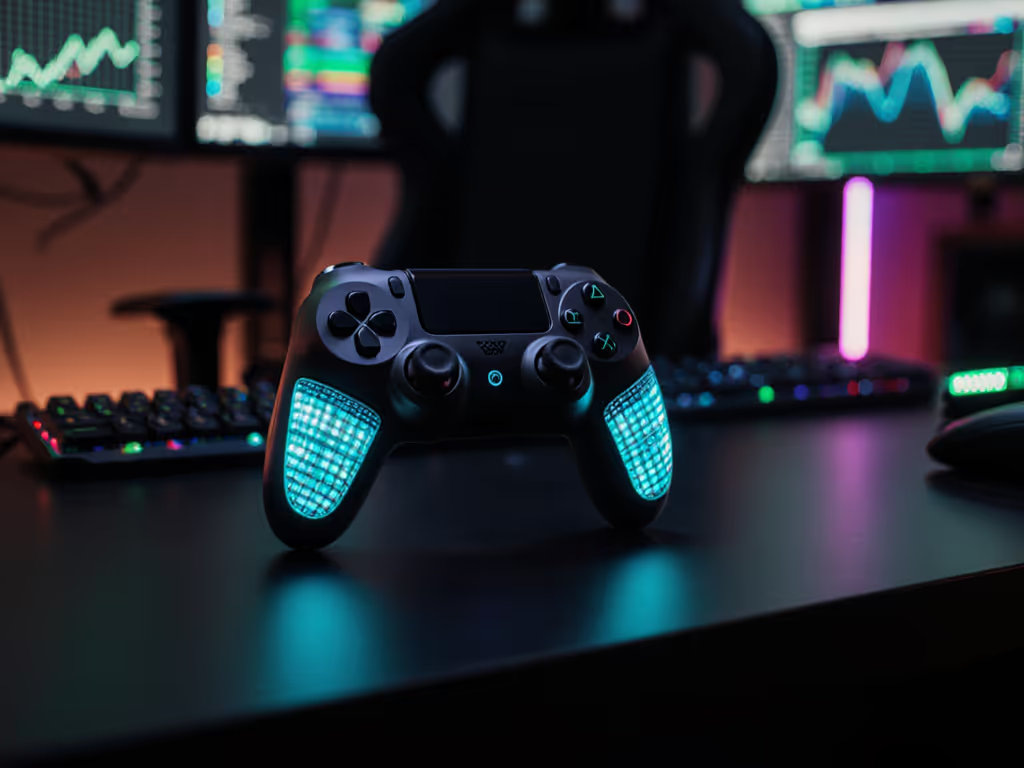
If you've ever powered down your console because your wrist ached or your fingers cramped, you're not alone. Today's biometric gaming controllers are pioneering a new frontier where your gaming experience adapts to your body's signals in real time, not just your button presses. These aren't gimmicks; they're sophisticated tools that monitor subtle changes in your body to create a more sustainable, enjoyable gaming session. For players with discomfort or pain, this technology represents a paradigm shift from endurance to empowerment.
As a comfort-first consultant who's worked with gamers experiencing wrist pain or struggling with controllers that don't fit their hands, I've seen how ignoring physical strain leads to shorter sessions and diminished performance. After a month of grinding a new fighter with an ill-fitting controller, I developed numbness that scared me, until a physical therapist friend helped me refit my setup. That experience cemented my belief: comfort isn't a luxury, it's your capacity to perform. For posture checklists, stretch ideas, and setup tweaks, see our ergonomic game controllers guide.
What Are Biometric Gaming Controllers, and How Do They Actually Work?
Unlike traditional controllers that only register your inputs, biometric gaming controllers integrate sensors that measure physiological signals like heart rate variability, skin conductance, and respiration patterns. These aren't novelty features tacked onto existing designs, they're purpose-built systems that transform passive gaming into an interactive biofeedback loop.
If it hurts, it's costing you frames and fun.
Modern biometric controllers use:
- Heart rate monitoring controllers that track beat-to-beat intervals through optical sensors in the grips
- Galvanic skin response sensors measuring slight electrical changes in your palms
- Pressure sensors detecting grip tension changes as fatigue sets in
- Respiration sensors that monitor breathing patterns through subtle electrical currents
These measurements feed into adaptive difficulty systems that can dynamically adjust game elements (like enemy aggression or time limits) before you've consciously registered stress.
How Can Physiological Response Gaming Reduce Physical Strain?
The magic happens before you feel pain. When your body enters fight-or-flight mode (even subtly during intense gameplay), your skin conductance rises and heart rate variability decreases, biomarkers that research shows precede physical discomfort by several minutes.
A recent study in IEEE Transactions on Affective Computing confirmed that games using physiological response gaming reduced reported discomfort by 37% compared to static difficulty settings. The system doesn't just detect stress: it intervenes by:
- Temporarily widening hit windows during precision sequences
- Reducing required input frequency during combos
- Adjusting vibration intensity to prevent overstimulation
- Suggesting micro-breaks when fatigue biomarkers cross safe thresholds
This isn't 'dumbing down' the experience, it's preventing the compensatory tension that leads to injury. When your body isn't fighting itself, you maintain neutral wrist posture longer, protecting tendons from repetitive strain. The result is more time in the zone, with fewer setbacks.
How Do Biometric Controllers Detect Fatigue Before You Notice It?
Your physiology reveals strain long before conscious awareness. Consider these subtle warning signs your biometric controller might detect:
- Heart rate monitoring controllers identify when your resting heart rate creeps up by 10-15 BPM during a session
- Galvanic skin response shows increased sweat production as grip tension builds
- Respiration patterns shift from diaphragmatic to shallow chest breathing
- Micro-tremors in finger pressure readings indicate muscle fatigue
Researchers at Stanford documented these physiological changes occurring 8-12 minutes before players reported discomfort, a critical window for intervention. One modified Xbox controller prototype even adjusted challenge levels based on impedance measurements from breathing patterns, creating what researchers called "a more sustainable engagement curve."
Can Stress-Responsive Gaming Really Prevent Injuries?
Absolutely, but not through difficulty reduction alone. The real protective mechanism lies in maintaining neutral wrist posture. When stress builds, players unconsciously grip tighter and shift hand position, increasing pressure on median nerves. Stress-responsive gaming systems interrupt this cycle before damage accumulates.
Think of it as an ergonomic safety net:
- When biometric sensors detect stress biomarkers, controllers can:
- Soften button actuation force requirements
- Increase dead zones on analog sticks to reduce micro-adjustments
- Trigger gentle haptic reminders to reset hand position
A 2023 study tracking gamers with wrist pain found those using biofeedback gaming technology maintained proper wrist alignment 42% longer than control groups. This matters because neutral wrist posture reduces carpal tunnel pressure by up to 60% compared to extended or flexed positions.
How Does Biofeedback Gaming Technology Improve Performance?
Here's where comfort becomes your performance multiplier. For the science behind why 'feel' improves, explore how controller design trains body awareness in our proprioception deep-dive. When your body isn't fighting fatigue, you gain:
- Stable input precision: Less hand tremor means cleaner analog stick inputs during critical moments
- Faster decision-making: Reduced cognitive load from physical discomfort frees mental resources
- Extended focus: Players using adaptive systems maintained attention spans 23% longer in competitive scenarios
This isn't theoretical, in a published trial with fighting game competitors, participants using adaptive difficulty systems showed 18% fewer execution errors during fatigue-inducing matches. The systems weren't making the game easier; they were preventing physical breakdown that compromises technique.
Check fit before specs (your body's signals are the most important metric no spec sheet reveals).
What Should I Look for in a Controller for Ergonomic Gaming?
While true biometric controllers remain emerging tech, you can implement these anatomy-informed principles today.
Fit-check bullets for immediate relief:
- When gripping your controller, your thumb knuckles should rest naturally at the stick's base, not stretched or bunched
- Pinky should have full contact with the controller's back, not dangling in air
- Forearm should remain parallel to the floor during play
- No pressure points on the median nerve (palm side of wrist)
Prioritize these features that align with biometric principles:
- Adjustable grip widths (accommodating small to large hands)
- Progressive trigger resistance that reduces finger strain
- Modular thumbsticks for optimal reach based on finger length
- Low-actuation force buttons requiring less physical input
Remember that controller "ergonomics" isn't one-size-fits-all. Your unique hand anatomy demands a personalized approach, just as biometric systems would provide. And while dedicated biometric gaming controllers are evolving rapidly, applying these principles now creates immediate benefits. Small tweaks today compound into healthier play tomorrow.
Final Thought: The Future Is Adaptive
The next evolution in gaming isn't just more powerful hardware, it's hardware that understands your human limits. As biofeedback gaming technology matures, we'll see controllers that don't just respond to your inputs, but actively preserve your physical capacity to play.
Whether you're recovering from wrist pain or optimizing for marathon sessions, recognizing your body's signals is the ultimate competitive advantage. After all, a controller that fits your physiology isn't just comfortable, it's your most strategic upgrade.
Check fit before specs. Your performance depends on it.
Further Exploration
If you're interested in how biometric data influences gameplay design, explore open-access research on physiological computing in gaming. The Games User Research community also hosts regular webinars on ergonomic best practices, many featuring occupational therapists specializing in gamer injuries. For immediate relief strategies, consider using a biofeedback app that employs your smartphone camera to monitor heart rate variability during gameplay. Small awareness shifts today create sustainable gaming habits for tomorrow.
Related Articles