Stop Guessing: Best Adaptive Trigger Controllers Revealed
By Maya Petrovic • 7th Nov
When you're in the heat of competition, milliseconds matter. That's why understanding how an adaptive trigger controller transforms your gameplay experience is crucial (not just as a novelty feature, but as a tool that provides dynamic resistance triggers specifically engineered to enhance your muscle memory). Forget flashy gimmicks; true performance gains come from controllers that help you build repeatable patterns while delivering the tactile feedback your fingers crave. If you want the nuts and bolts behind that tactile feel and latency, see our game controller tech explainer. I've spent years analyzing how professional players interact with their hardware, and one thing separates contenders from champions: the ability to make consistent inputs under pressure. Let's cut through the marketing hype and identify which controllers actually deliver the precision edge you need.
Why Adaptive Triggers Matter More Than You Think
Many gamers treat adaptive triggers as a "nice-to-have" feature, but they're fundamentally changing how we interact with games. Unlike traditional analog triggers that simply measure how far you press, adaptive trigger controller technology creates varying levels of resistance that simulate real-world actions (like the pull of a bowstring or the kickback of a shotgun). This isn't just about immersion; it directly impacts your ability to form consistent trigger-pull patterns.
Consider this: in a tactical shooter, different weapons have distinct trigger behaviors. With standard triggers, you're essentially guessing how much pressure to apply. But with properly calibrated dynamic resistance triggers, you develop muscle memory that automatically adjusts to each weapon type. This is where I've seen players make the biggest leaps, the ones who stop thinking about their inputs and start reacting instinctively.
Reduce travel, reduce errors. This simple principle is what separates controlled performance from frantic inputs.
The Consistency Connection
My first year coaching competitive players taught me a critical lesson: flashes of brilliance don't win tournaments. What wins is consistent execution, game after game. I once worked with a talented player whose tournament performance consistently fell just short of promotion. After analyzing his gameplay, we discovered his trigger technique was inconsistent (he'd press too hard during clutch moments, causing micro-stutters in his aim). By optimizing his playstation trigger tech settings and adding paddle-assisted inputs, we eliminated those anxiety-induced errors. For a step-by-step on trigger locks, remap paddles, and hair triggers, check our Victrix Gambit Prime setup guide. His win rate increased steadily over six weeks not because he suddenly became more talented, but because his inputs became reliably consistent.
This is where adaptive triggers shine beyond mere novelty, they create physical feedback that anchors your technique. When you feel appropriate resistance for a sniper rifle versus an automatic weapon, you subconsciously adjust your pressure without conscious thought. This is the foundation of consistent performance.
Evaluating Controllers for True Performance Gains
Before diving into specific models, let's establish what actually matters when selecting a controller for competitive play. Many reviews focus on flashy features while ignoring what serious players need for consistent performance.
Key Evaluation Criteria
When I assess controllers for my coaching clients, I look for these critical elements:
- Adjustable trigger stops: How precisely can you set your activation point?
- Trigger responsiveness: How minimal is the input lag between trigger pull and in-game action?
- Physical feedback quality: Does the resistance feel natural and consistent across different pressure levels?
- Customization depth: Can you tailor the trigger behavior to specific genre-specific trigger feedback needs?
- Ergonomic integration: How do triggers work with your hand positioning during extended sessions?
Don't fall for "all-day comfort" claims without testing how the controller feels when you're three hours into ranked play. True ergonomic design considers how your hand position shifts during fatigue and maintains consistent trigger access.
The Xbox Controller Adaptive Triggers Question
While many focus on PlayStation's implementation, it's worth noting that Xbox controller adaptive triggers have made significant strides. However, their implementation differs substantially from Sony's approach. Microsoft's triggers offer binary resistance (either full resistance or none), while PlayStation provides variable resistance that can simulate different physical sensations. For how each platform's haptics stack up in real games, read our Xbox vs PlayStation haptic comparison. For players focused on consistency across multiple platforms, this distinction matters significantly (especially when transitioning between competitive titles that utilize these features differently).
Product Reviews: Adaptive Trigger Controllers Compared
Let's examine the controllers that deliver genuine performance benefits through intelligent adaptive trigger implementation. These aren't just expensive toys, they're tools engineered to help you build repeatable muscle memory.
Sony DualSense Edge Wireless Controller: The Customization Benchmark
The DualSense Edge represents Sony's answer to the customization demands of serious players while maintaining the signature adaptive trigger experience. For deep testing results and setup tips, see our DualSense Edge review. This isn't just a premium DualSense with extra buttons, it's a complete rethinking of how playstation trigger tech can serve competitive players.
What sets it apart is the precise control over trigger behavior. You can set distinct activation points for each trigger independently, creating custom profiles for different game genres. For FPS players, I recommend setting a shorter travel distance for faster shots. This reduces the physical movement required while maintaining the satisfying resistance that prevents accidental full pulls. The Edge's trigger system allows you to dial in that sweet spot where you get the tactile feedback without unnecessary movement.
The Edge controller shines in its ability to maintain Sony's haptic feedback system while adding tournament-level customization. You can create separate profiles for different games, each with trigger settings optimized for that specific title's genre-specific trigger feedback requirements. For racing games, you might want longer, smoother trigger travel for precise throttle control, while shooters benefit from a more immediate response.
This controller addresses the most common complaint I hear from players using standard DualSense controllers: "I love the adaptive triggers, but I wish I could customize them." The DualSense Edge delivers exactly that, with fine-tuned control over every aspect of the trigger experience while maintaining the haptic feedback that makes Sony's implementation so compelling.
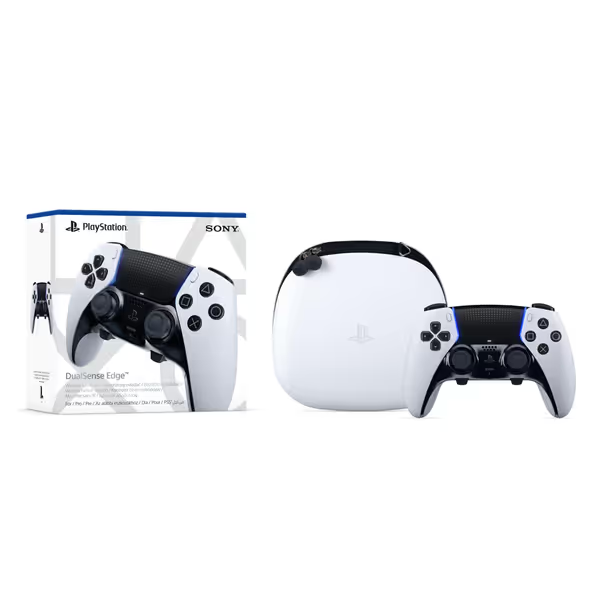
PlayStation DualSense Edge Wireless Controller
Unleash ultimate precision and customization for a competitive edge.
$199
Customizable FeaturesSwappable stick modules, back buttons, adjustable triggers
Customizable FeaturesSwappable stick modules, back buttons, adjustable triggers
Pros
Modular design for extended lifespan and custom feel.
Mappable back buttons for game-changing actions at your fingertips.
Adjustable trigger lengths optimize gameplay for any genre.
Cons
Battery life receives mixed user feedback.
Premium price point may not suit all budgets.
Customers find the PlayStation DualSense Edge Wireless Controller to be solid and reliable, with one customer noting it works perfectly on PS5. They love the color, with one mentioning it shimmers in different shades at different angles. The battery life receives mixed feedback - while some praise its great performance, others report it's terrible. Value for money is also mixed, with some finding it worth the price while others consider it overpriced.
Customers find the PlayStation DualSense Edge Wireless Controller to be solid and reliable, with one customer noting it works perfectly on PS5. They love the color, with one mentioning it shimmers in different shades at different angles. The battery life receives mixed feedback - while some praise its great performance, others report it's terrible. Value for money is also mixed, with some finding it worth the price while others consider it overpriced.
Victrix Pro BFG Reloaded: The Modular Powerhouse
If the DualSense Edge represents refinement of Sony's approach, the Victrix Pro BFG Reloaded is a complete rebuild engineered for competitive play. This controller features Hall-Effect technology across all inputs, eliminating the stick drift issues that plague even high-end controllers, but what makes it special for serious players is its trigger system.
The patented 5-stop Hall-Effect Clutch Triggers with Hair-Trigger mode provide adjustable sensitivity that's ideal for FPS gamers who need lightning-fast reactions. Unlike other controllers that simply shorten trigger travel, the Victrix system maintains the physical feedback while eliminating wasted movement. This is crucial (when you're building muscle memory, you need consistent tactile information, not just reduced travel).
For competitive players, I recommend this setup: set your triggers to the second-shortest stop position. This gives you immediate response without sacrificing the ability to feel subtle resistance changes. The Hall-Effect technology ensures consistent performance over time (no gradual degradation that makes your muscle memory obsolete as the hardware wears).
What I appreciate most as a coach is how the Victrix design philosophy aligns with consistency-focused play: simplify inputs, reduce hand movement, and maintain reliable feedback. The trigger system exemplifies this approach, providing the information you need without unnecessary complexity.
The Pro BFG Reloaded does sacrifice Sony's haptic feedback, but what it gains is tournament-level reliability and customization. For players who prioritize competitive edge over immersion features, this trade-off makes perfect sense.
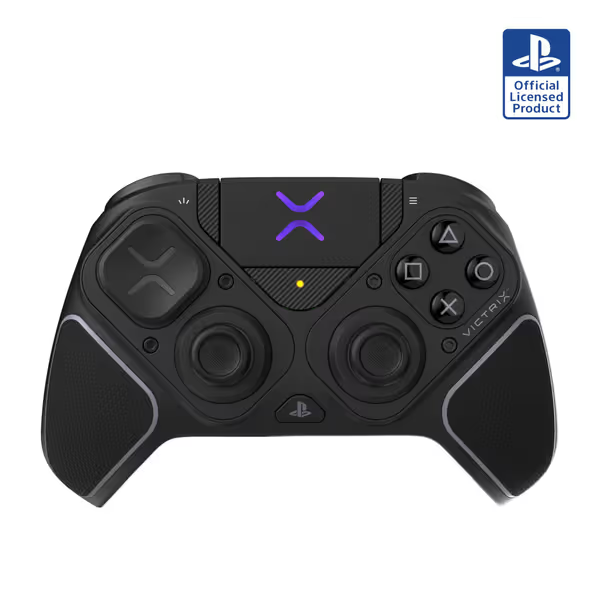
Turtle Beach Victrix Pro BFG Reloaded
Unleash ultimate precision and customization for competitive PlayStation and PC gaming.
$209.99
ConnectivityWired & Wireless (20hr battery)
ConnectivityWired & Wireless (20hr battery)
Pros
Modular design for unparalleled customization (Hall-Effect sticks/triggers).
Enhanced 6-button fightpad module with Kailh microswitches.
Officially licensed PlayStation product with 3D Audio support.
Cons
Gyro functionality lacks rumble and adaptive triggers.
Customer feedback split on value and joystick size.
Customers praise the controller's buttons, particularly the 4 back buttons, and appreciate its customization features.
Customers praise the controller's buttons, particularly the 4 back buttons, and appreciate its customization features.
SCUF Envision Pro: Precision Engineered for PC Competition
While primarily designed for PC, the SCUF Envision Pro brings console-level adaptive trigger technology to Windows gaming with impressive results. The "Instant Triggers" feature is particularly noteworthy (this isn't just shortened travel, but a complete reconfiguration of the trigger mechanism that gives you mouse-like click response when needed).
The Envision Pro's strength lies in its configurable trigger response curves. Rather than simply offering on/off positions, you can create custom resistance profiles that match your specific needs. For rhythm games, you might want linear resistance; for shooters, you might prefer a sharper initial resistance that eases as you press further. This level of customization is rare even among premium controllers.
As a coach, I've seen players struggling with inconsistent trigger pulls in competitive fighting games. The SCUF's solution? The adjustable Instant Triggers let you switch between full trigger range for precise inputs and mouse-like clicks for rapid actions. This isn't just convenient, it fundamentally changes how you build muscle memory for different game types.
The controller's five remappable G-Keys integrate seamlessly with the trigger system, letting you create complex input sequences with minimal hand movement. For example, you could map a quick grenade throw to a paddle while maintaining trigger finger position for immediate follow-up shots. This kind of configuration reduces hand movement substantially (exactly what we need to build consistent performance).
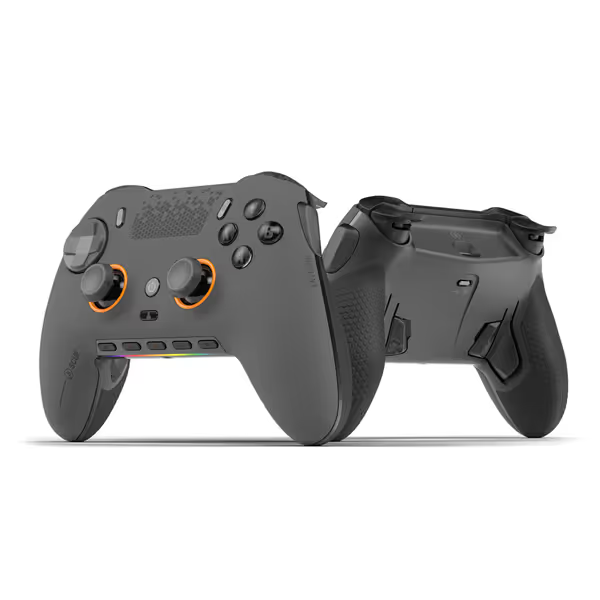
SCUF ENVISION PRO Wireless V1 (2023) PC Gaming Controller
Elite PC controller with advanced remapping and ultra-fast wireless for competitive play.
$99.99
Wireless TechnologyCorsair SlipStream Ultra-Fast Wireless
Wireless TechnologyCorsair SlipStream Ultra-Fast Wireless
Pros
Unrivaled customization with 5 G-Keys, 4 paddles, and 2 SAX buttons.
OMRON mechanical switches and instant triggers deliver lightning-fast reactions.
Comfortable, rubberized grip for extended, fatigue-free gaming sessions.
Cons
Concerns about software quality and long-term durability reported.
High price point, with divided opinions on overall value for money.
The controller feels great with its rubberized handle and the instant triggers are amazing for shooters. Buttons are hit or miss, but the real issue is the software and longevity.
The controller feels great with its rubberized handle and the instant triggers are amazing for shooters. Buttons are hit or miss, but the real issue is the software and longevity.
What Matters Most: Building Your Consistent Performance System
Having tested dozens of controllers with competitive players, I've identified what actually makes the difference between frustrating inconsistency and reliable performance:
Three Critical Trigger Optimization Drills
These aren't just recommendations (they're the exact drills I use with my coaching clients to build consistent trigger technique):
-
The Resistance Recognition Drill: Set your controller to provide maximum trigger resistance. Practice pulling the trigger to specific positions without looking (just 25% pull, then 50%, then 75%). This builds subconscious awareness of trigger position that translates to consistent inputs under pressure.
-
The Quick-Release Exercise: In a shooter, practice pulling the trigger just enough to activate your weapon, then immediately releasing. Do this 50 times without firing. This trains the fine motor control needed for precise tapping in games where over-pulling creates recoil issues.
-
The Dual-Pressure Transition: Set up different resistance profiles for different weapons in your favorite game. Practice switching between them without adjusting your grip. This simulates real gameplay conditions where you must adapt trigger technique instantly.
Your Controller Choice Checklist
Before making a decision, ask yourself these questions, not what looks cool, but what will serve your consistency goals:
- Does the controller allow me to reduce unnecessary thumb/finger movement while maintaining needed tactile feedback?
- Can I create profiles that match my specific game genres with appropriate genre-specific trigger feedback?
- Does the trigger system provide consistent resistance over time, or will it degrade and force me to rebuild muscle memory?
- When fatigued during extended play, does the trigger placement remain accessible without hand repositioning?
Remember my core principle: Simplify the inputs, and you'll amplify consistent outcomes. Don't pay for features that complicate your technique. Invest in what streamlines your path to reliable performance.
Final Verdict: Choosing Your Consistency Partner
For Competitive PlayStation Players: DualSense Edge
If you want the best balance of Sony's signature haptic feedback with competitive customization, the DualSense Edge is unmatched. Its trigger customization depth lets you maintain the playstation trigger tech experience while optimizing for your specific playstyle. The ability to create multiple profiles means you can switch between optimal settings for different game genres without compromising the core adaptive trigger experience.
For Tournament-Focused Players: Victrix Pro BFG Reloaded
When absolute reliability and customization are your priorities, the Victrix Pro BFG Reloaded delivers. The Hall-Effect triggers maintain consistent performance over time, and the five-stop adjustment system gives you precise control over trigger behavior. While you lose Sony's haptic feedback, you gain tournament-level consistency that won't degrade as the hardware ages.
For PC Competitive Players: SCUF Envision Pro
The SCUF Envision Pro bridges the gap between console and PC gaming with impressive adaptive trigger implementation. Its configurable response curves and Instant Triggers feature provide flexibility other PC controllers lack. If you play across multiple platforms or need deep customization for specific PC titles, this is the controller that delivers.
Reduce travel, reduce errors. This isn't just a catchy phrase. It is the foundation of consistent performance that separates good players from great ones.
The Bottom Line
Your controller isn't just an input device. It's the physical interface between your decisions and their in-game consequences. When evaluating adaptive trigger controller options, prioritize features that support consistent muscle memory development over flashy gimmicks. The best controller for you is the one that helps you make the same precise inputs, game after game, regardless of pressure.
Stop guessing at your trigger technique. Start building consistent performance through intelligent hardware choices that support (rather than undermine) your muscle memory development. The difference between good and great often comes down to those precious milliseconds of consistent input that adaptive triggers can help you master.
Related Articles