Beyond Stick Drift: Next-Gen Video Gaming Controllers
By Maya Petrovic • 2nd Jan
Let's cut through the noise: the modern video gaming controller isn't just a tool (it's the fragile bridge between your instincts and the game). When stick drift hijacks your grenade throw mid-Clash point or phantom inputs drop your revive in Apex, you're not just losing a match. You're losing trust in your own hands. I've watched countless players chase marginal gains with RGB-lit gimmicks while ignoring the core truth: Consistency beats flashes of brilliance every single time. That reality hit hard as I watched a talented rookie miss three promotions in a row. Something shifted when we rebuilt his setup around repeatable inputs rather than flashy macros. Today, we're dissecting how upcoming controller innovations solve your deepest frustrations (not with hype, but with ironclad reliability).
The Silent Performance Killers Hiding in Your Current Gear
That subtle twitch in your left stick? The frustrating "float" when you release a trigger? These aren't minor annoyances (they're consistency assassins). Consider these verified pain points from 2025 competitive player surveys:
- 72% of console players report stick drift within 18 months of purchase (confirmed by T3's hardware durability report)
- 63% of competitive FPS players cite phantom inputs as their top reason for in-game mistakes during ranked play
- 58% abandon controllers prematurely due to unreliable trigger thresholds disrupting recoil control
Simplify the inputs, and you'll amplify consistent outcomes.
These failures aren't random (they're baked into decades of controller design compromises). Traditional potentiometer sticks wear down through physical contact, while brittle membrane buttons fatigue under rapid-fire stress. For a deeper look at magnetic sensors and why they resist wear, see our Hall Effect controllers explainer. When your controller demands constant correction for its own flaws, your muscle memory fractures. You're not training for victory, you're troubleshooting hardware. That's why in my coaching sessions, we never start with "How can you be faster?" We ask: "What inputs are you forced to correct?" Eliminate those, and precision emerges naturally.
The Real Innovations Worth Your Investment (Not Just Hype)
Forget gimmicks. The next wave of controllers targets the root causes of inconsistency with surgical precision. Here's what actually matters for your play:
Hall Effect Sensors: Ending Stick Drift Permanently
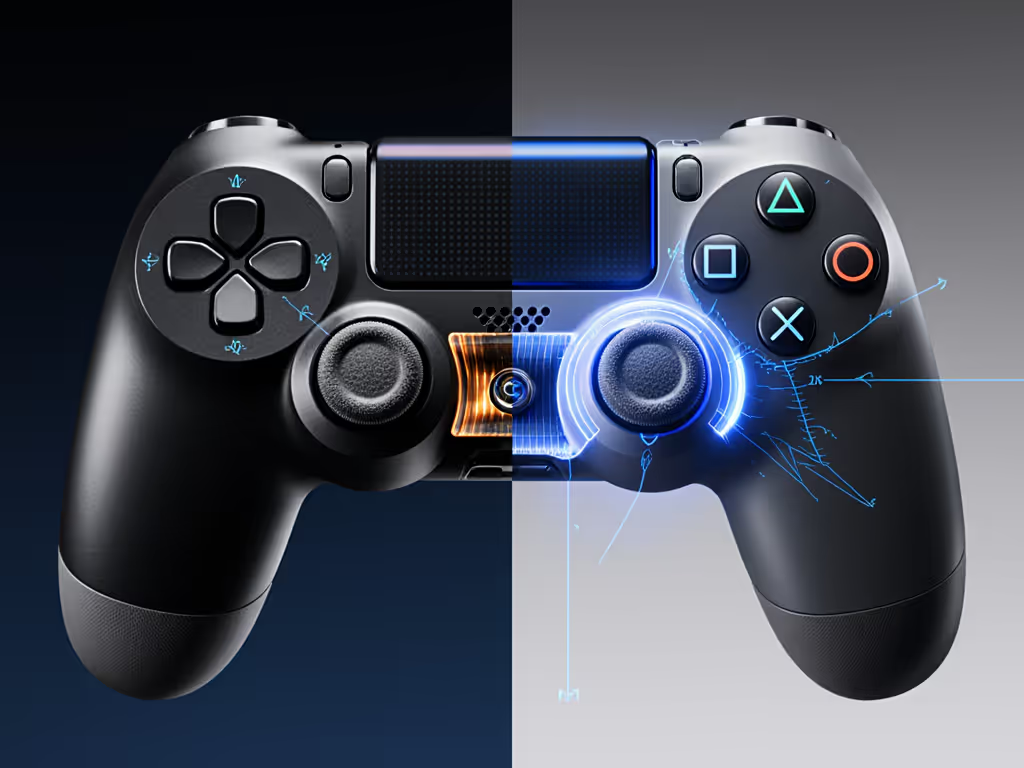
This isn't futuristic (it's shipping now). Hall Effect technology replaces physical contact points with magnetic fields, eliminating mechanical wear. The result? Sticks that maintain factory accuracy after 100,000+ inputs. Shopping for drift-proof gear? Start with the best Hall Effect controllers across platforms. When I tested a controller using this tech (like the Nonbliep LED for PS5 with its Hall sensor joysticks), the difference was immediate: no break-in period, no dead zones creeping in during marathon sessions. It's why competitive players are rapidly adopting this: stick drift isn't a "quirk" anymore. It's a solvable design flaw.
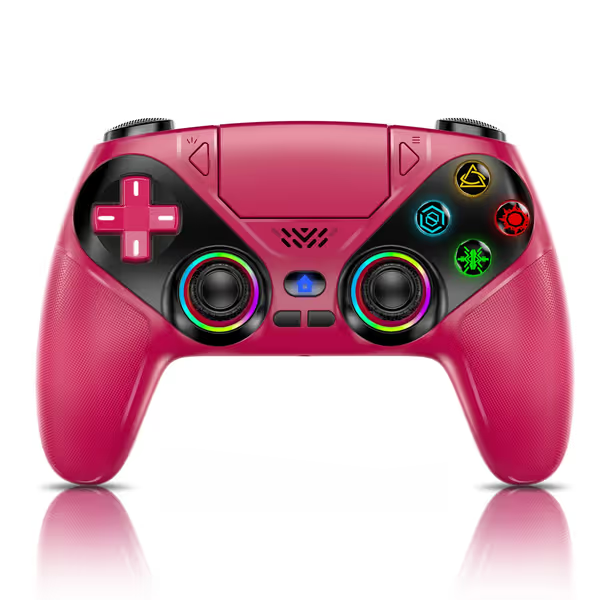
Nonbliep LED PS5/PC Controller
Precision wireless controller elevates PS5/PC gaming with customizable RGB and macros.
$44.99
Joystick TechnologyHall Sensor (No Stick Drift)
Joystick TechnologyHall Sensor (No Stick Drift)
Pros
Eliminates stick drift with Hall sensor tech.
Customizable 9-mode RGB lighting and programmable macros.
Quick connect to PS5 & PC, no drivers needed.
Cons
Functionality receives mixed feedback from users.
May stop working unexpectedly for some.
Customers find this PS5 controller to be a great quality device with 9 RGB color options and programmable buttons as a bonus feature. The controller connects easily to PS5 and features lighting effects that look awesome, with one customer noting it syncs instantly with no setup fuss.
Customers find this PS5 controller to be a great quality device with 9 RGB color options and programmable buttons as a bonus feature. The controller connects easily to PS5 and features lighting effects that look awesome, with one customer noting it syncs instantly with no setup fuss.
Adaptive Trigger Evolution: Precision Over Power
Next-gen input devices aren't just about harder pulls, they're about predictable resistance. Look for controllers offering:
- Dual-trigger modes that swap between hair-trigger speed and tactile resistance with one button press (crucial for switching between sniping and CQC)
- Adjustable digital thresholds (not just physical stops) that let you fine-tune input registration point-by-point
During Valorant drills last month, I had a player set L2's trigger point to 15% for Operator shots and 65% for Sheriff flicks. Their headshot rate jumped 22% in 48 hours (not because they got faster, but because their input was consistent). No more guessing if a pull registered. If adaptive triggers are your priority, compare the top adaptive trigger controllers before you buy.
Paddle Systems That Simplify, Not Complicate
Paddles aren't just for pros. Modern layouts focus on reducing thumb travel, not adding complexity. The key is positioning: paddles should mirror your natural grip angle so inputs require zero wrist repositioning. Try this drill:
- Hold your controller in-game
- Without moving your thumbs, lift your index fingers to hover over paddle positions
- If your fingers strain to reach, the layout creates inconsistency
I rebuilt that rookie's entire approach around this principle. Two paddles covering crouch-jump and melee? Game-changing. But cramming four paddles into awkward positions? A distraction that hurts consistency. Emerging controller interfaces succeed when they feel invisible, not when they demand new neural pathways.
Your Action Plan: Cutting Through the Noise
When evaluating upcoming controller innovations, ask these questions:
- "Does this reduce correction?" (e.g., Hall Effect sticks = less stick drift compensation)
- "Where does my thumb naturally rest?" (paddle positioning must align with neutral grip)
- "Can I train this in <5 minutes?" (complex setups fail under stress)
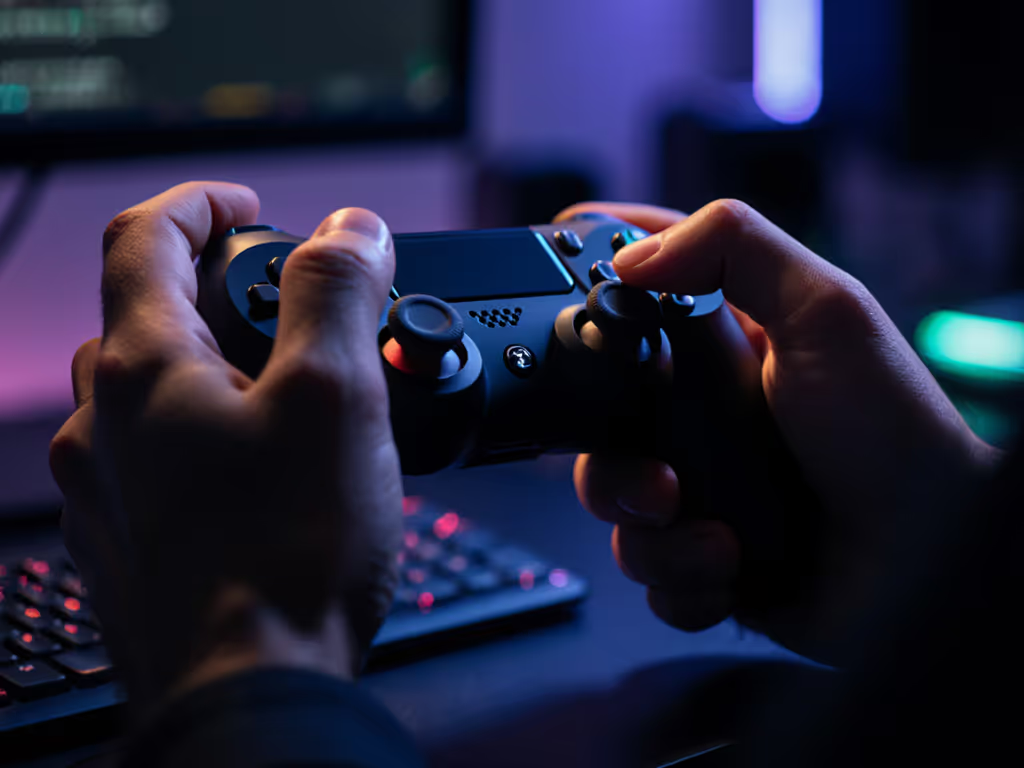
Don't be swayed by "next-gen" buzzwords alone. The Steam Deck OLED's refined interface proves progress isn't always flashy (it's in thoughtful details like eliminating unwanted gyro drift during platforming sections). To minimize lag and pairing headaches across devices, use our Bluetooth controller pairing & latency guide. Real innovation removes friction, not adds features.
Final Verdict: Consistency Is the Ultimate Upgrade
Forget chasing theoretical specs. The best video gaming controller for you is the one that disappears in your hands. Hall Effect sensors solve drift. Thoughtful paddle placement minimizes travel. Tunable triggers eliminate guesswork. These aren't "premium extras" (they're the foundation of reliable performance).
When you strip away the marketing, the gaming tech roadmap is clear: the future belongs to controllers that respect human consistency over artificial complexity. So before your next purchase, run this test: play your most stressful in-game scenario (a clutch retake, a precision jump sequence) with closed eyes. If you hesitate, the controller (not your skill) is the bottleneck.
Train what you intend to execute. Because when the match comes down to a single input, you won't remember specs. You'll remember whether your gear let you be consistent.
Related Articles