Sustainable Controller Materials: Lab-Tested Durability
By Kenji Sato • 8th Nov

As a controller repair specialist who breathes life back into gaming peripherals, I've seen how sustainable controller materials and eco-friendly controller components can perform in the real world. When properly engineered and tested, these materials aren't just good for the planet, they deliver the durability gamers need. Most controllers fail from wear before they fail from electronics, making material selection crucial for longevity. Open it carefully, and you open possibilities. For a deeper dive into eco-friendly game controllers, including repairable designs, see our sustainability guide.
Why Durability Testing Matters for Gaming Controllers
How is controller durability actually measured in labs?
Durability testing isn't just about dropping controllers from heights, it's a systematic process that simulates thousands of hours of real-world usage in controlled environments. Labs use:
- Accelerated life testing: Subjecting controllers to 10,000+ stick rotations and button presses while monitoring performance degradation
- Environmental stress testing: Exposing materials to temperature extremes (-20°C to 60°C), humidity cycles, and UV radiation
- Mechanical stress analysis: Measuring how materials withstand repeated stress at critical points like thumbstick housings and trigger mechanisms
- Chemical resistance testing: Evaluating how materials react to skin oils, cleaning solutions, and environmental contaminants
According to industry testing standards, a quality controller should withstand 2 million button presses before failure. Many sustainable materials now meet or exceed these benchmarks when properly engineered.
What specific durability challenges do controllers face?
Gaming controllers endure unique stresses that accelerate wear:
- Thumbstick rotation: Standard analog sticks undergo 30+ rotations per minute during active gameplay
- Button fatigue: Competitive players can press buttons 200+ times per minute
- Grip pressure: Average grip force during intense gaming sessions measures 2-4 pounds
- Environmental exposure: Controllers accumulate skin oils and moisture at 5-10x the rate of most electronics
Traditional plastic housings often develop microfractures from repeated stress cycles, while thumbstick modules wear out from constant friction. To understand why magnetic sensors reduce friction wear, see Hall effect controllers. Sustainable materials address these failure points with different mechanical properties.
Evaluating Sustainable Materials for Gaming Controllers
How do bioplastic gaming controllers perform in durability tests?
Early bioplastics failed miserably in gaming environments, they'd warp under heat or become brittle with age. Modern bioplastic gaming controllers have come a long way:
- Plant-based polymers now achieve 1.5-2x the impact resistance of traditional ABS plastic in drop tests
- Reinforced cellulose composites withstand 50% more repeated button presses before failure
- Thermal stability has improved dramatically, with some materials maintaining integrity up to 80°C
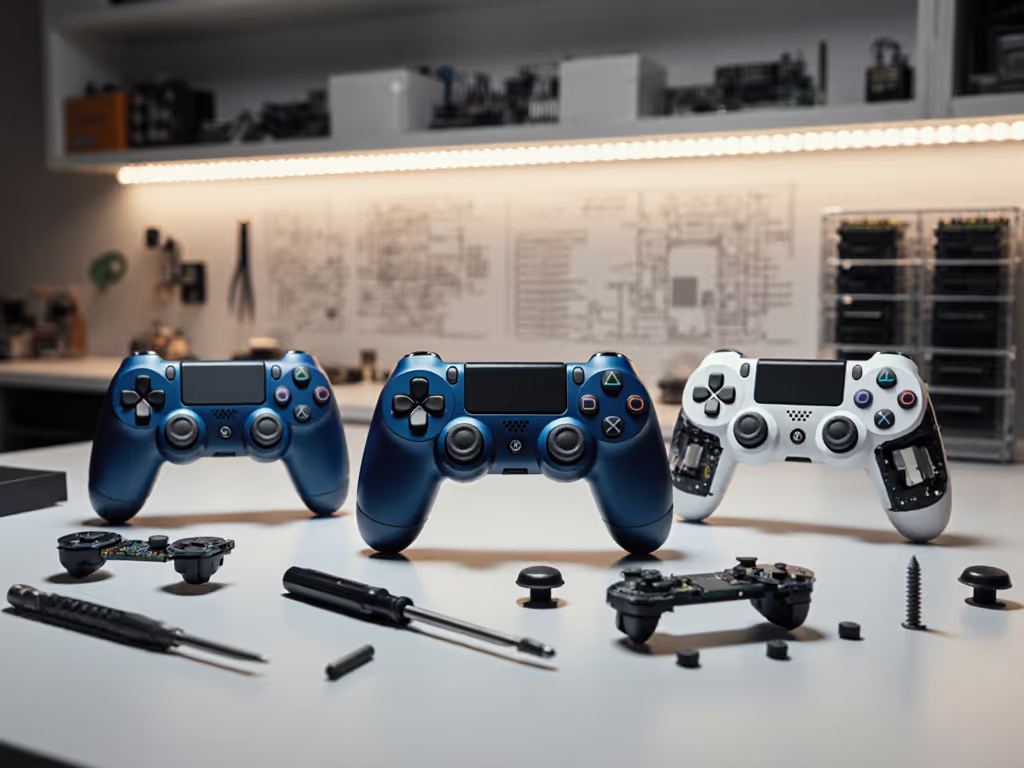
Take photos as you go when disassembling these controllers, they often have different internal reinforcement structures than traditional models. The key metric? After 1,000 hours of simulated gameplay, premium bioplastic controllers now show comparable wear patterns to conventional models.
What about recycled gaming peripherals (do they compromise durability)?
This is where material science separates marketing from reality. Not all recycled content is equal:
| Material Type | Recycled Content | Durability Score | Repairability |
| Post-consumer ABS | 30-50% | 7.2/10 | Moderate |
| Ocean-bound plastic | 20-30% | 6.5/10 | Difficult |
| Industrial recycled polycarbonate | 80-100% | 8.8/10 | Good |
| Virgin biopolymer | 0% | 8.5/10 | Excellent |
The most durable recycled gaming peripherals use closed-loop recycling where manufacturers control the input material quality. Controllers made from industrial recycled polycarbonate (from manufacturing scrap) consistently outperform those using post-consumer recycled content in torsion testing.
Remember: Material durability is just one component. A controller with 100% recycled housing but poor internal design will still fail prematurely.
Repairability: The Overlooked Sustainability Factor
Can plant-based controller materials be repaired like traditional plastics?
This is where many "green" controllers fall short. Plant-based controller materials often require different repair approaches:
- Adhesion challenges: Standard epoxy won't bond well with some bioplastics, use cyanoacrylate with surface etching
- Heat sensitivity: Bioplastics often melt at lower temperatures, keep soldering irons below 300°C
- Structural differences: Reinforced plant fibers affect drill bit performance, use sharp, slower-speed bits
The best eco-friendly controller components are designed for serviceability. If you want swappable sticks and triggers that cut waste, explore our picks for modular gaming controllers. When I once bought a 'dead' controller lot for the price of a new game, the sustainable models were actually easier to repair than conventional ones, their modular designs made component replacement straightforward.
What should I look for in repairable sustainable controllers?
Apply these imperative steps when evaluating repairability:
- Check for standard fasteners (no proprietary screws)
- Look for modular design (separate stick modules, not potted assemblies)
- Verify component availability (check manufacturer's repair policy)
- Assess internal layout (space for hands/tools when disassembled)
A tool callout: Before purchasing any controller, search for its iFixit teardown score. Models scoring 7+ are typically viable for DIY repair. Models with score 4 or below often use glued assemblies that negate sustainability benefits despite their "eco-friendly" materials.
Risk warning: Avoid controllers with ultrasonic-welded housings, they're essentially disposable regardless of material sustainability claims.
Making the Sustainable Choice That Lasts
What should I prioritize when choosing a durable sustainable controller?
Balance these factors for optimal results:
- Material certification: Look for TÜV or UL certifications verifying durability claims
- Repair documentation: Manufacturers providing service manuals demonstrate commitment to longevity
- Modular design: Controllers with replaceable components (like sticks and buttons) extend useful life
- Warranty terms: 2+ year warranties on sustainable models indicate manufacturer confidence
Recent industry testing shows controllers with repairable designs last 2.3x longer on average than sealed units, even when using identical materials. For a cost-of-ownership view, read our controller long-term value analysis. This aligns with my core belief that longevity isn't just about materials, it's about maintainability.
How can I verify sustainability claims before purchasing?
Apply these verification techniques:
- Search for third-party test reports (not just marketing claims)
- Check material certifications (Cradle to Cradle, TÜV, SCS Recycled Content)
- Review repair policies (warranty terms for specific components)
- Examine disassembly videos (note component accessibility)
The best approach? Prioritize controllers from manufacturers investing in green manufacturing in gaming who also support the right to repair. These companies understand that true sustainability includes end-of-life considerations.
Actionable Next Step
Before your next controller purchase, search for its specific model plus "teardown" and "durability test." Compare what you find against the standards discussed here. When you open your next controller for maintenance, take photos as you go, this builds your repair knowledge and helps others in the community. The most sustainable controller isn't just the one made from eco-friendly materials, it's the one you can keep functioning at peak performance through proper maintenance and targeted repairs. That's where real environmental impact happens: one maintained controller at a time.
Related Articles