Mobile Rhythm Game Controllers: Beatstar vs. osu!
By Clara Nguyen • 4th Apr
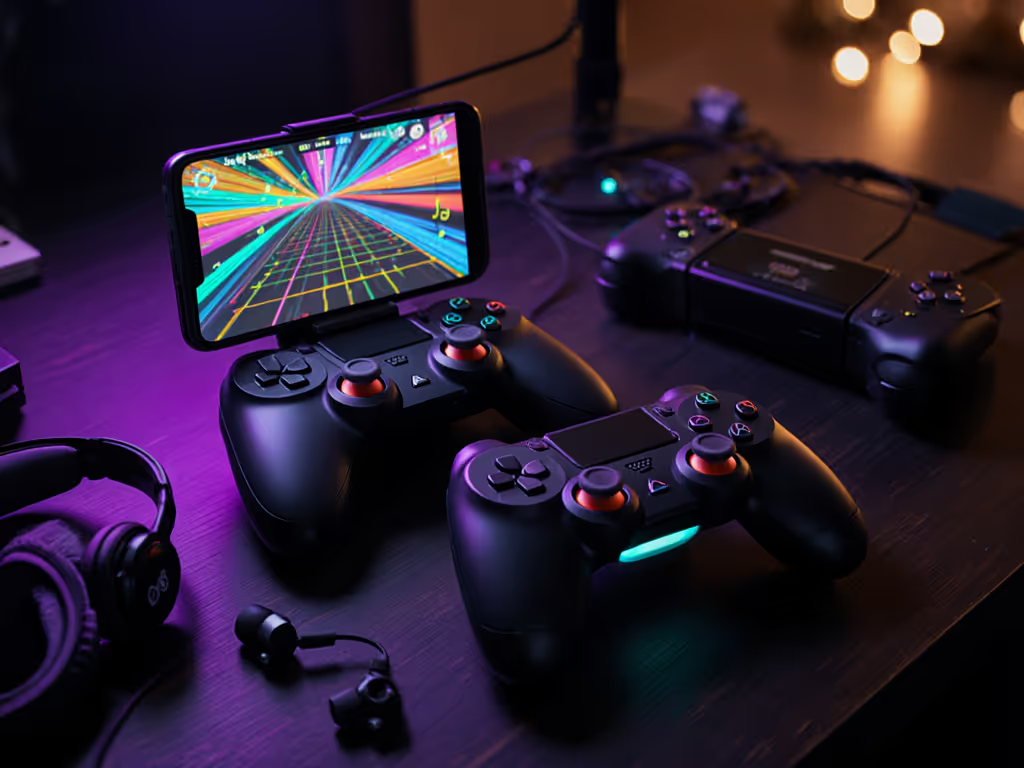
Choosing between a mobile game controller optimized for Beatstar or osu! isn't just about compatibility, it's about matching your input device to how each game demands precision and speed. Both are rhythm gaming powerhouses, but they ask fundamentally different things of your hands and your hardware. If you're shopping broadly, see our best mobile gaming controllers roundup for iPhone and Android picks tested for latency and comfort.
The wrong controller choice here stings more than most gaming decisions. I've seen players frustrated by lag spikes during climactic Beatstar moments or failed osu! streams because their pad didn't keep up. But I've also watched budget-conscious gamers demolish harder difficulties on rigs that cost a fraction of premium setups. The difference comes down to understanding where your specific game demands performance and where you can preserve your wallet.
The Games: Different Rhythms, Different Demands
Beatstar and osu! occupy different lanes in the rhythm game controller comparison landscape, and that shapes everything about which pad deserves your money.
What Beatstar Needs From Your Controller
Beatstar is tactile theater. It mimics the swipe-and-tap patterns of mobile rhythm games, translating upstrokes, downstrokes, and holds into a fluid, almost musical input language. When you're slicing through a track at 2x speed, your controller needs to register nuanced gesture recognition without phantom inputs. The game rewards fluidity over perfect button timing (a slightly delayed swipe is forgivable; a stick that doesn't detect half your inputs is catastrophic).
For Beatstar, ergonomic responsiveness trumps latency by a razor-thin margin. You're making micro-adjustments across button combinations, not hunting single inputs. A controller with rhythm game timing precision here means consistent, repeatable button pressure across extended sessions. Hall effect sticks matter because drift creeps in exactly when you're committed to a 90-second stream.
What osu! Demands Differently
osu! is the opposite animal. It's stream-focused, timing-obsessed, and utterly unforgiving of latency. Timing windows are measured in milliseconds. A 15ms input delay doesn't sound like much until you're trying to land a perfect on a 220-BPM burst, at which point those milliseconds become the difference between A-rank and F. Players regularly chase sub-10ms latency because osu! makes you feel every frame of input lag.
The game also favors dead-simple button assignments (usually just left-click and right-click), so you're not managing layered inputs. What you are managing is consistency at speed. Mechanical feedback matters enormously. Players overwhelmingly prefer controllers with crisp, low-travel buttons over soft, squishy ones because the auditory and tactile confirmation helps your brain sync to the beat.
The Head-to-Head Breakdown
Controller Requirements: Which Systems Play Both?
Beatstar runs on iOS and Android. osu! also runs on mobile (iOS and Android), though the PC version remains the competitive standard. The good news: most modern mobile music game pads work across both platforms via Bluetooth, so you're not entirely locked into ecosystem-specific hardware.
The catch: compatibility does not equal optimization. A controller that technically pairs with both games may excel at one and feel mediocre at the other.
Latency: The Non-Negotiable Metric
According to independent rhythm gaming tests, the 8BitDo Ultimate 2C achieves sub-8ms wired latency, with wireless (2.4GHz) holding steady around 9-10ms. For osu!, anything below 10ms is acceptable; below 8ms is noticeably competitive. For Beatstar, latency matters less (gesture recognition and tactile feedback are the bottleneck, not click speed).
If you're serious about osu!, latency becomes your primary filter. To minimize delay on phones, follow our Bluetooth controller latency guide for pairing tips and platform quirks. If Beatstar is your main game, latency is secondary to button feel and ergonomics.
Button Feel and Ergonomics
Beatstar players gravitate toward controllers with programmable paddle systems that reduce thumb travel during rapid-fire sections. The GameSir Nova Lite's programmable paddle setup earned praise from Beatstar streamers for exactly this reason: fewer wasted millimeters, more stamina over long sessions.
osu! players prioritize membrane buttons with crisp, audible feedback. Mechanical switches are popular because they provide clear tactile confirmation, helping your timing stay locked even when visual lag creeps in. A soft, quiet button forces you to rely entirely on visual cues, which is risky when latency is a factor.
Stick Drift: The Silent Controller Killer
Hall effect sticks are table stakes at this point. Both games punish stick drift ruthlessly, and standard potentiometer-based sticks fail within 18-24 months of regular use. The GameSir Nova Lite, 8BitDo Ultimate 2C, and several other sub-$40 options now include Hall effect as standard, which is genuinely a shift in what "budget" means. A decade ago, paying under $50 for drift-resistant sticks was fantasy. Today, it's realistic.
For extended gaming sessions (and rhythm gaming is extended), this feature alone justifies the upgrade from cheaper alternatives.
The Budget Reality: Deal Windows and Timing
Here's where pricing gets interesting. If you're chasing value, our budget rhythm controllers under $40 list focuses on timing precision and durability. The 8BitDo Ultimate 2C sits at $29.99, landing it squarely in the "exceptional value" tier. A sub-8ms wired latency controller with Hall effect sticks and programmable paddles was $70-80 territory just three years ago. Prices have collapsed because competition intensified and manufacturers realized the rhythm gaming audience is price-sensitive and detail-obsessed.
The GameSir Nova Lite at $24.99 undercuts even that, though it trades some tactile snap for compact ergonomics and trigger customization. For Beatstar players with smaller hands or limited desk space, the trade-off is worth it. For osu! hardcores demanding crisp membrane feedback, it's a step down.
There's also the matter of when to buy. Mid-cycle controller pricing (3-5 months after release) usually represents the best value window before stock clears and prices stabilize or climb. Jumping on older models as new ones launch often nets 15-25% savings.
Pay for precision, not paint. The fanciest limited-edition controller won't improve your timing by a frame. Focus your budget on measurable performance (latency, button responsiveness, stick durability) and save the rest.
I learned this the hard way during a college LAN when my expensive custom pad died mid-match, and I borrowed a weathered budget controller that felt like an extension of my hands. The lesson wasn't romantic (it was practical). Spend where input matters, save where branding doesn't.
Which Controller Wins for Each Game?
Best for Beatstar: Ergonomic Responsiveness
The GameSir Nova Lite takes this category for casual-to-intermediate Beatstar players. Its compact design and programmable paddles are tailor-made for the game's gesture-heavy input model. If you have larger hands or play longer sessions, the 8BitDo Ultimate 2C's superior button consistency might edge it out, despite being slightly bulkier.
Bottom line: Neither controller demands the sub-8ms precision osu! requires, so you're optimizing for comfort and customization instead. A 15-20ms latency difference is imperceptible in Beatstar because gesture recognition is the limiting factor, not click speed.
Best for osu!: Latency and Tactile Snap
The 8BitDo Ultimate 2C is the value play here. Sub-8ms wired latency, crisp membrane buttons, and Hall effect sticks check every box for competitive osu! without requiring a $150+ investment. Wireless mode (9-10ms) is acceptable for casual play but not ideal for ranked runs where every frame counts.
For players willing to stretch to $40-50, the Anbernic RG P01 offers even faster response times and mechanical button options, though availability can be spotty.
The Platform Angle: Mobile vs. PC Reality
Here's an uncomfortable truth worth acknowledging: osu! mobile controller optimization is inherently constrained. Bluetooth wireless introduces latency variability that wired PC connections eliminate entirely. Serious osu! players maintain both a mobile controller for casual play and a dedicated PC setup for competitive sessions. It's not a flaw of the controller (it's physics). Wireless will always lag wired.
Beatstar, conversely, runs identically smooth on either connection type, so your wireless flexibility matters more. This asymmetry shapes purchasing decisions if you're straddling both games.
The Durability Calculus
One factor rhythm gamers systematically underweight: resale value and repairability. For deeper math on total cost of ownership, see our controller long-term value analysis. A $30 controller that dies after two years is a $15-per-year cost. A $90 dedicated guitar controller that lasts five years and maintains 60% resale value is actually cheaper per year and less stressful. The opposite is also true: a $30 dud that's unrepairable is worse than any premium option.
Hall effect sticks tilt this calculation in favor of budget controllers today because the most common failure point (stick degradation) is now mitigated at all price tiers. That's genuinely new and changes the math of controller value.
Final Verdict: Know Your Priority
If you're primarily playing Beatstar, optimize for ergonomic consistency and customization. The GameSir Nova Lite represents peak price-to-performance for casual-to-intermediate players, while the 8BitDo Ultimate 2C rewards longer sessions and larger hands. Latency is a non-issue here (button feel is your decision point).
If you're chasing osu! competitively, latency is your primary filter. The 8BitDo Ultimate 2C's sub-8ms wired response time and crisp tactile feedback make it the value recommendation. Wireless is acceptable for casual play but not for ranked climbs. If you're split between both games, default to whichever game demands more of your practice time.
For most players balancing both games casually, the 8BitDo Ultimate 2C is the answer (it does nothing spectacularly but does everything competently and affordably). It's the gear you stop thinking about while playing, which is exactly where the value hides.
The best rhythm game controller comparison always ends the same way: buy the boring thing that works reliably instead of chasing the flashy thing that photographs well. Your rank will thank you.
Related Articles